
Advancing the stories and ideas of the kingdom of God.
Surinder Kaur
Amid rising persecution, Indian Christians share Jesus’ love with friends and neighbors through delectable dishes.
Abhishek Singh, 46, fondly remembers going caroling from door to door as a child in Jabalpur, a city in the central Indian state of Madhya Pradesh. As he sang Christmas carols in English and Hindi with his friends, appreciative families would hand him cashews, almonds, and sometimes even kebabs—a coveted delicacy of grilled minced-meat skewers flavored with aromatic spices.
Now, his home welcomes a steady stream of visitors, including eager young carolers, at Christmastime. “Our kettle would never be off the stove,” Singh, who’s an office manager, said. “Chai was constantly on the boil to serve to the guests.”
Across India’s bustling cities, Christmas hospitality takes on a uniquely communal dimension as homes become gathering places for people across different faiths, even as Christian hosts continue to face persecution amid rising Hindu nationalism.
Each weekly CT Pastors issue equips you with the best wisdom and practical tools for church ministry.
This site is protected by reCAPTCHA and the Google Privacy Policy and Terms of Service apply.
Thanks for signing up.
Explore more newsletters—don’t forget to start your free 60-day trial of CT to get full access to all articles in every newsletter.
Sorry, something went wrong. Please try again.
Hindu extremists have forced Christians living in Madhya Pradesh to flee their homes. Last year, the state’s district court sentenced 42-year-old pastor Ramesh Ahirwar and his wife, Sakshi, to two years in prison and fined them 25,000 rupees (about $300 USD) each for breaking an anticonversion law.
The Ahirwars paid the fine while submitting an appeal to the High Court, and the state court granted them bail last May. They are now waiting for the court to announce the date of their appeal hearing, all the while feeling like a sword is hanging over their heads.
This has not dampened their resolve to open their home to visitors at Christmastime. “We cannot live in constant fear, so we chose to trust the Lord and continue to live our lives one day at a time,” Ramesh Ahirwar said.
Vikram Mukka
Surinder Kaur
After he leads the December 25 service, his church holds lunch in a big space to accommodate congregants and visitors. Both events have an “open invitation” that he extends to everyone he knows. “A few of my Hindu neighbors and Muslim friends attend the Christmas play and join us for lunch,” he said.
These gestures of hospitality in Christian homes across India reflect other interfaith celebrations throughout the year, like Diwali with Hindu friends and Eid al-Fitr with Muslims.
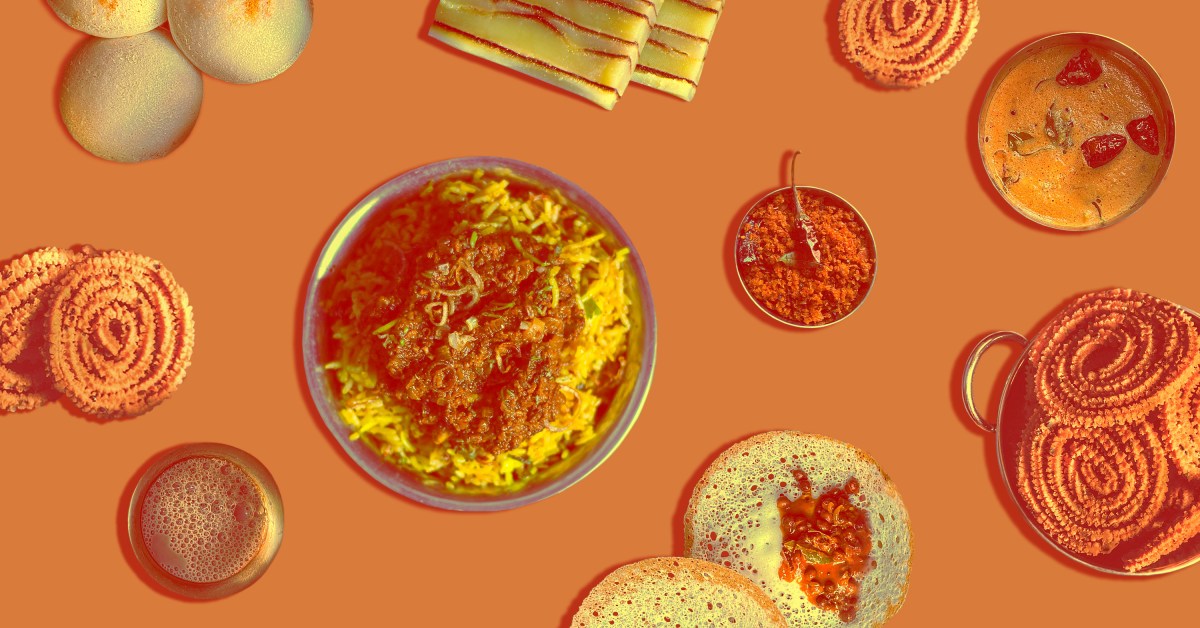
In Hyderabad, the capital of the south-central state of Telangana, 65-year-old retired English professor Grace Sudhir spends several weeks preparing her annual Christmas feast. In one corner of her kitchen sits buttery dough that she will fry into crispy murukku (Tamil for “twisted”), a festive snack prepared with rice-and-lentil dough and added spices.
In another corner, candied fruit and nuts soak in spirits, their sweet, boozy aroma mixing with the cardamom and cinnamon that perfumes the air. A plum cake, stuffed with a variety of nuts, cherries, orange and lemon peels and seasoned with cloves, cumin, and nutmeg, bakes in the oven.
When she’s done, Sudhir will share these creations with her neighbors of various faiths to demonstrate “Christ’s love for all humanity,” she said. She does this even as Telangana is experiencing a spike in violence against Christians this year, with mobs assaulting pastors and church leaders, burning Bibles, and vandalizing church buildings.
“As Christians, we are supposed to pray for those who persecute us and spread the good news about Christ, and that is what I try to do,” she said.
Vikram Mukka
Vikram Mukka
Christmas cuisine in India differs from state to state. But it has deeply Christian roots, dating back to the arrival of the apostle Thomas to southwestern India’s Malabar Coast in what is traditionally believed to be AD 52.
The region, now known as Kerala, is home to one of the oldest Christian communities in the world. Christians in Kerala—better known as Syrian Christians—make a special Christmas treat every year called appams. These lacy-edged pancakes, shaped from rice batter, contain soft, pillowy centers and are perfect for soaking up coconut-rich stews fragrant with black pepper and curry leaves. The traditional duck roast that follows is a study in patience; it takes about three hours of cooking time to prepare the tender meat, its skin crackling with spices.
Christians in Tamil Nadu, a state on the southeast coast, often prepare a popular regional dish, Dindigul biryani, which comprises distinctive dark grains and tender meat like chicken, lamb, or seafood marinated overnight in yogurt and spices.
In Goa, a state on India’s western coast, the most impressive part of a Christmas feast may be the bebinca, a multilayered dessert that requires days of preparation. Each of its 7–16 layers is individually cooked until the coconut-egg dessert achieves its distinctive striped appearance.
Prior to pulling this sweet out, hosts may serve dukra maas, in which pork belly becomes butter-soft after hours of slow cooking with spices, the fat melting into a sauce eaten with sannas, pillowy rice cakes that smell of toddy (a coconut wine).
Meanwhile, Christmas celebrations in Christian-majority states like Nagaland and Mizoram often feature nga atoiba thongba, a mashed fish curry made with vegetables and spices.
Over in the western Indian state of Gujarat, Sunday school teacher Jyotsana Lall, 49, hosts five different groups of non-Christian guests every Christmas, from her children’s friends and their parents to marathon-running companions and colleagues.
Since a majority of people in Gujarat are vegetarian, Lall mainly prepares dishes like bajre ka vada (pearl millet fritters), bajre ki bhakri (pearl millet flatbread), and totha ki sabji (pigeon-pea bean curry).
In a state with an anticonversion law in effect, it is difficult to have an open conversation with someone about Christ and his redemptive power, Lall says.
“But a decorated house, the aroma of goodies, and above all the love with which we share food with others send the message of the sacredness of Christmas,” she said.
Surinder Kaur
Compiled by Vijayesh Lal
Welcoming non-Christian friends for Christmas celebrations in her home often piques her guests’ curiosity about the holiday and compels them to ask her about her reasons for doing so, Lall said. Last year, a Hindu friend likened Lall’s Christmas busyness to her experience of Diwali fatigue and asked Lall how she could host so many different groups for meals and do everything “with a smile.”
Her friend’s question was a “great opportunity to share with her the source of my joy that does not vanish under stress or pressure,” Lall said.
Meanwhile, Singh welcomes close to 25 non-Christian families into his home in Madhya Pradesh, starting the week before Christmas up to the first week of the new year. His mother often prepares presents for close friends too, giving them new saris and shirts for their children along with Christmas cake and home-cooked goodies.
Jesus’ boldness in crossing religious and social boundaries by dining with tax collectors, healing a Roman centurion’s servant, and conversing with Samaritan women has been instrumental in guiding Singh’s Christmas hosting tradition.
“[Christ’s] hospitality wasn’t conditional on conversion but flowed from love,” Singh said. “He demonstrated that God’s welcome extends beyond faith boundaries, inviting us to do the same.”
Ann Harikeerthan
Divya Chirayath
Rahil Patel
Divya Chirayath
Surinder Kaur
View All
Jayson Casper
One Catholic and one Muslim, they disagree on the role of religion in their work in Lebanon, but are united in their aim.
News
Joyce Wu
The territory’s worst fire in decades claimed more than 150 lives.
The Russell Moore Show
N.T. Wright takes a listener’s question about the parable of the talents told in Luke 19, and why it’s not all that it seems.
Surinder Kaur
Amid rising persecution, Indian Christians share Jesus’ love with friends and neighbors through delectable dishes.
Compiled by Manik Corea
Explore how the faith has flourished in Singapore, the Philippines, Indonesia, and other countries in this religiously diverse region.
Review
Grace Hamman
Classicist Nadya Williams argues for believers reading the Greco-Roman classics.
Ashley Hales
Some young Christians embrace lower-tech options.
Marvin Olasky
20 more suggestions from our editor in chief.
You can help Christianity Today uplift what is good, overcome what is evil, and heal what is broken by elevating the stories and ideas of the kingdom of God.
© 2025 Christianity Today – a 501(c)(3) nonprofit organization
“Christianity Today” and “CT” are the registered trademarks of Christianity Today International. All rights reserved.
Seek the Kingdom.