
Vatican News
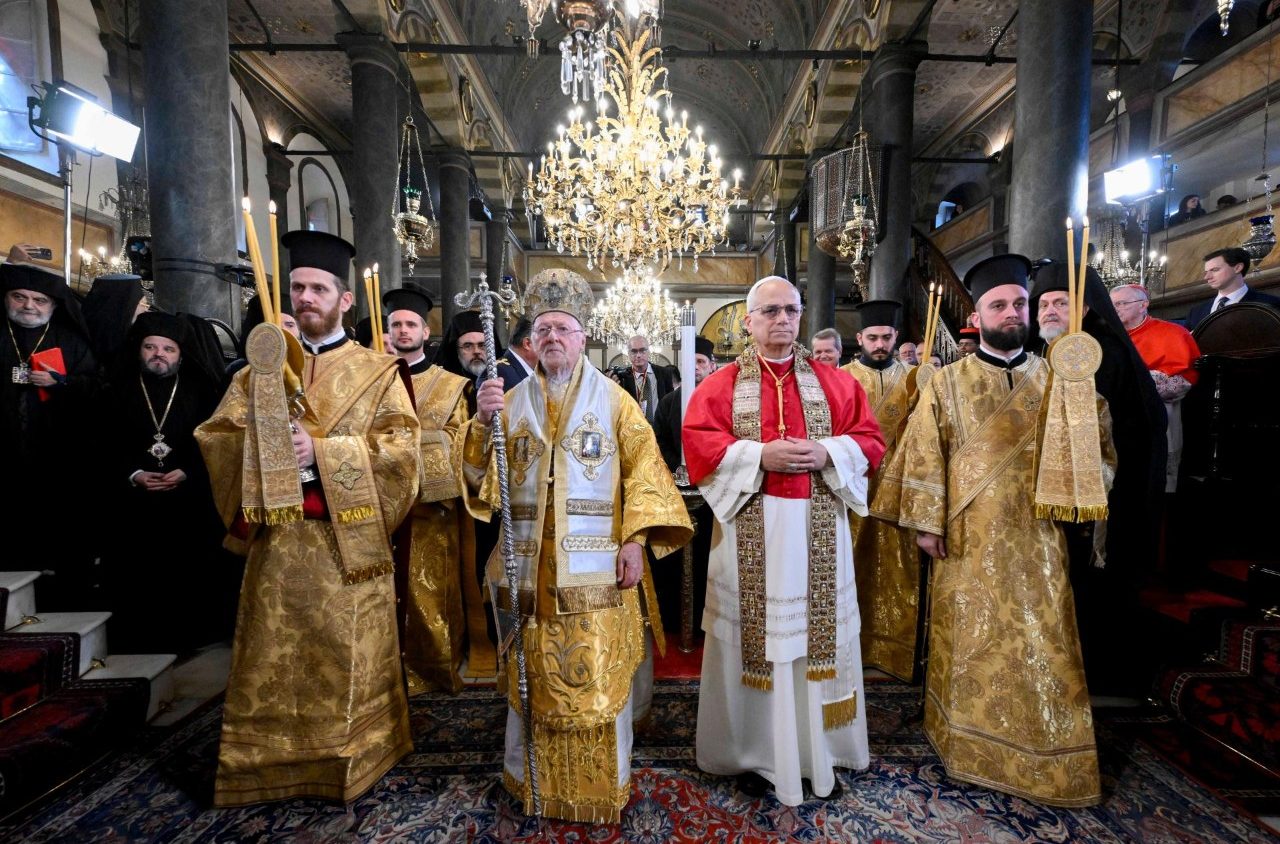
Pope Leo XIV visited the Ecumenical Patriarchate in Istanbul, Türkiye, on Sunday, 30 November, invited by Patriarch Bartholomew, to attend the Divine Liturgy at the Venerable Patriarchal Church of Saint George.
Over 400 members of the Holy Synod of the Ecumenical Patriarchate, and members of the Episcopate, made up the congregation at the Divine Liturgy on this day celebrating the patronal feast of the Apostle Andrew.
In his address delivered at the celebration, Pope Leo remarked how this pilgrimage together to the places where the First Ecumenical Council in the history of the Church took place, in Nicaea, culminates in this solemn Divine Liturgy on the liturgical feast of Saint Andrew.
He remarked how the ecumenical prayer service has brought together the Heads of Churches and Representatives of Christian World Communities, recalling how “the faith professed in the Nicene-Constantinopolitan Creed unites us in real communion and allows us to recognize each other as brothers and sisters.”
Despite the “many misunderstandings and even conflicts” of the past and challenges of the present in “achieving full communion,” he said, we must continue to strive towards unity and “continue to consider each other as brothers and sisters in Christ and to love one another accordingly.”
Ecumenical Patriarch Bartholomew, in his homily for the Divine Liturgy, offered words of joy for this day on which the Church celebrates the feast of Saint Andrew, and he gave warm words of welcome to Pope Leo, Successor of Saint Peter, for this fraternal visit.
“As successors of the two holy Apostles, the founders of our respective Churches," said Patriarch Bartholomew, "we feel bound by ties of spiritual brotherhood, which obligate us to work diligently to proclaim the message of salvation to the world. Your blessed visit today, just like the exchange of delegations from our Churches on the occasion of our respective thronal feasts, cannot be reduced to events of mere protocol, but on the contrary, express in a very concrete and personal way our deep commitment to the quest for Christian unity and our sincere aspiration to the restoration of full ecclesial communion.”
Both spiritual leaders recalled the visits to the Ecumenical Patriarchate of previous Popes, in particular sixty years ago when Pope Paul VI and Patriarch Athenagoras solemnly lifted the mutual excommunications of 1054.
Pope Leo said that “historic gesture by our venerable predecessors inaugurated a path of reconciliation, peace and growing communion between Catholics and Orthodox, which has been fostered through frequent contact, fraternal meetings and promising theological dialogue.”
And given the significant progress that has been made since then, “today we are called even more to commit ourselves to the restoration of full communion.”
Both leaders underscored a common commitment as well to respond to our Christian vocation to work for justice, peace, and concretely showing charity and mercy to all people.
In particular, the war-torn areas of the world were cited, and how Catholics and Orthodox are called to be peacemakers.
Pope Leo noted that “this certainly means taking action, making choices and adopting gestures that build peace, while also acknowledging that peace is not merely the fruit of human effort, but is a gift from God” that we must seek “through prayer, penance, contemplation and nurturing a living relationship with the Lord, who helps us to discern what words, gestures and actions to undertake so that we can genuinely be at the service of peace.”
Pope Leo also lamented the grave ecological crisis we all are facing and the need for “spiritual, personal and communal conversion for changing direction and safeguarding creation,” as Patriarch Bartholomew has passionately advocated in his ministry.
Pope Leo noted that “Catholics and Orthodox alike are called to work together in promoting a new mindset so that everyone acknowledges responsibility for caring for the creation that God has entrusted to us.”
In conclusion, the Pope also mentioned new technologies, especially in the realm of communications, and how they pose a challenge but also great opportunities that Catholics and Orthodox can face in assuring they are “placed at the service of integral human development, and be universally accessible, so as to ensure that their benefits are not reserved to a small number of people or the interests of a privileged few.”
Patriarch Bartholomew expressed “our fervent gratitude for Your visit to our city and its Church and Your participation in these solemn festivities.” He said, “May our holy and great founders and patrons – the holy glorious and all-laudable Apostles Andrew the First-Called and Peter the Coryphaeus – intercede for us all before the One whom they faithfully served and preached ‘unto the ends of the world.’ May they continue to inspire us all with the breadth of their ecclesial vision and with the resolve of their apostolic mission, so that we may continue our common pilgrimage in quest of Christian unity and bear witness together so that the world may believe that ‘we have found the Messiah.’”
Pope Leo offered his “fervent wishes for good health and serenity” to Patriarch Bartholomew, and expressed his profound gratitude for the warm and fraternal welcome extended, entrusting all to “the intercession of the Apostle Andrew and his brother Saint Peter, Saint George the Great Martyr to whom this Church is dedicated, the Holy Fathers of the First Council of Nicaea and the many Holy Pastors of this ancient and glorious Church of Constantinople. And I ask God, the Father of mercies, abundantly to bless all those present.”
Thank you for reading our article. You can keep up-to-date by subscribing to our daily newsletter. Just click here
The Pope’s Agenda
Pope’s Activities
Our Faith
Useful Information
Other sites
Our channels