
Premier Christianity uses cookies Read our cookie policy.
2025-11-06T09:00:00+00:00
Advertisement feature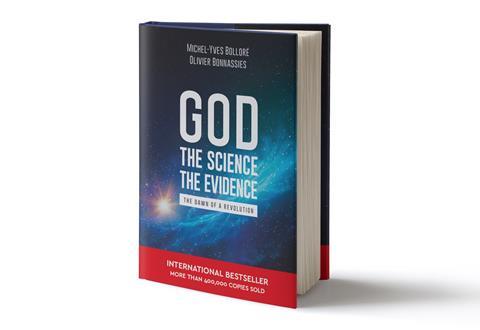
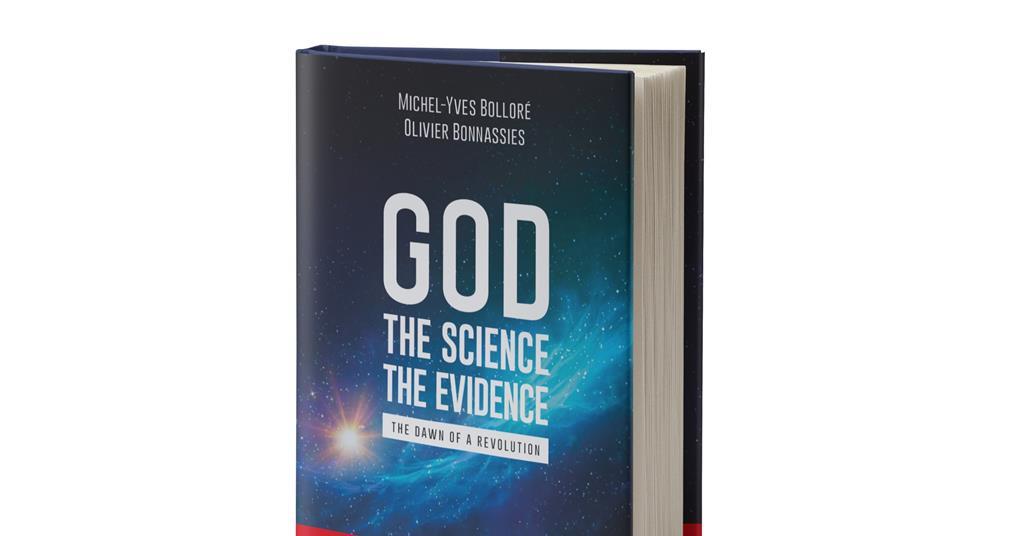
The publication of an updated and expanded English version of the international bestseller God, Science, The Evidence, which has sold over 400,000 copies globally, marks a major milestone in the revival of interest in the scientific evidence for the existence of God.
Can the existence of God be known with certainty through the natural light of reason, by rationality alone, without faith?
For centuries, this was a widely accepted belief, yet modern science once seemed to dispute it. As scientific understanding grew, many began to explain the workings of the world without reference to a Creator. This rational, materialistic approach dominated much of the 19th and 20th centuries.
But over the past hundred years, extraordinary scientific discoveries have reshaped that narrative. The evidence now points toward a profound reversal, one that reopens the question of God’s existence.
God, the Science, the Evidence, investigates one fundamental question, the existence of a creator God, through a single approach: reason. A dozen distinct scientific, philosophical and historical domains are explored, examining the probability of God’s existence based on modern knowledge.
The book makes no secret of the conclusion: materialism, once thought to be the rational stance, is now an irrational belief. Today, a vast and convergent body of evidence from science, philosophy, and history affirms the existence of God beyond reasonable doubt.
What makes this inquiry possible is that the hypothesis of God’s nonexistence has specific, real-world implications. If God does not exist, then:
The universe cannot have had an absolute beginning; it must always have existed.
Chance alone must govern everything, in both physics and biology.
Good and evil have no objective meaning.
Prophecies, miracles, apparitions, and revelations must be impossible.
Each of these claims can be tested rationally, and modern science allows us to assess many of them with unprecedented precision.
Across numerous disciplines, three key findings converge:
Our universe consists of time, space, and matter, three inseparable realities, as Einstein demonstrated. His theories not only unified these elements but also made testable predictions that were swiftly confirmed by observation. No philosopher or thinker could have imagined this 150 years ago, yet it is now universally accepted.
Multiple scientific fields, from cosmology to thermodynamics, support the conclusion that the universe had an absolute beginning. The cosmos of time, space, and matter did not always exist, and they came into existence together.
The fundamental parameters that define our universe are extraordinarily precise. The conditions that allow stable atoms, long-lived stars, and ultimately, life itself, are so finely balanced that even slight deviations would render existence impossible.
Two facts stand as particularly formidable challenges to atheism: the beginning of the universe and its fine-tuning.
The Beginning
If you deny God’s existence, you must either reject the notion of a beginning or deny that this beginning had a cause, positions that have become scientifically untenable.
Even Stephen Hawking acknowledged that the universe almost certainly had a beginning. However, he attempted to explain it away by claiming that “because there is a law such as gravity, the universe can and will create itself out of nothing.” His colleague, Oxford mathematician John Lennox, offered a succinct rebuttal: “Nonsense is nonsense, even when spoken by a world-famous scientist.”
Fine-Tuning
The fine-tuning of the universe offers two rational explanations.
The first, and most straightforward, is that such precision reflects a “superiorly intelligent mind” behind creation, an intelligence that reveals itself in the laws of nature and created everything “with measure, number, and weight,” as the Bible says.
The second is to propose that there exists an enormous number of universes, perhaps 10⁵⁰⁰ or more, and that we simply inhabit the one where the conditions happened to align by chance.
Yet this multiverse hypothesis leads to extreme improbabilities. If you wish to remain an atheist, you must believe in an unimaginable number of universes, 10⁵⁰⁰ at minimum, each requiring its own mechanism of creation. That mechanism, too, must be exquisitely fine-tuned to produce such diversity.
Science has, in a sense, come full circle. The philosophical proofs and the countless evidences of Revelation—miracles, apparitions, saints, and testimonies of personal encounters with the divine—all remain valid. Together, they form a unified picture: science, philosophy, and faith now point in the same direction.
We stand in a new moment in history, one where everything converges.
God, the Science, the Evidence is unique in its comprehensive, accessible, and rigorously factual approach which sums it all up, may mark a turning point in the modern debate over God’s existence.
Grab this Deal!
We’re celebrating a remarkable journey from our humble beginnings as Buzz in the 1960s to the vibrant, multi-platform publication we are today. One thing has remained constant: our commitment to connecting faith with the world around us. To celebrate our birthday, we are offering you a Print and Digital subscription for just £24 your first 12 months!
Subscribe Today
*Offer applies in UK only, but check here for our overseas offers
Site powered by Webvision Cloud