
Daniel Hofkamp
01 DECEMBER 2025 · 12:45 CET
The defence of faith – apologetics – has experienced a boom in the evangelical sphere in recent decades. However, the answers it offers have not always responded to the questions that people are really asking.
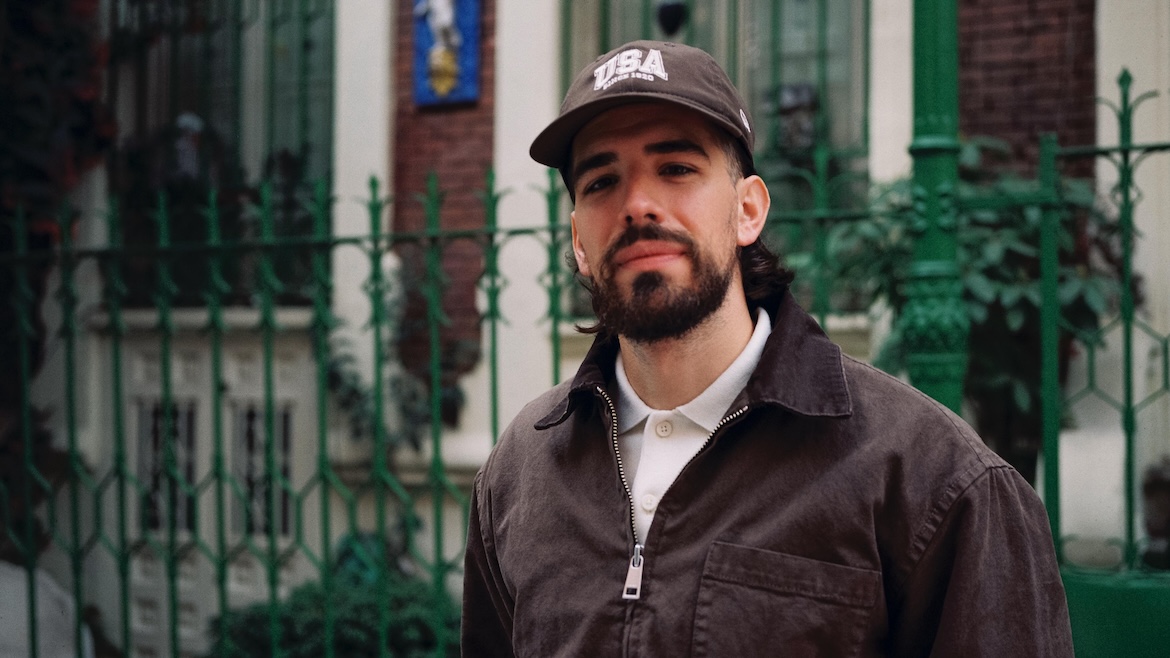
Perhaps this is because the church, on the basis that the truth is written in the Bible, has not left much room for questions. Josué Moreno, a Spanish podcaster known for dialoguing from his Christian faith with influencers, rebels against this in his first book.
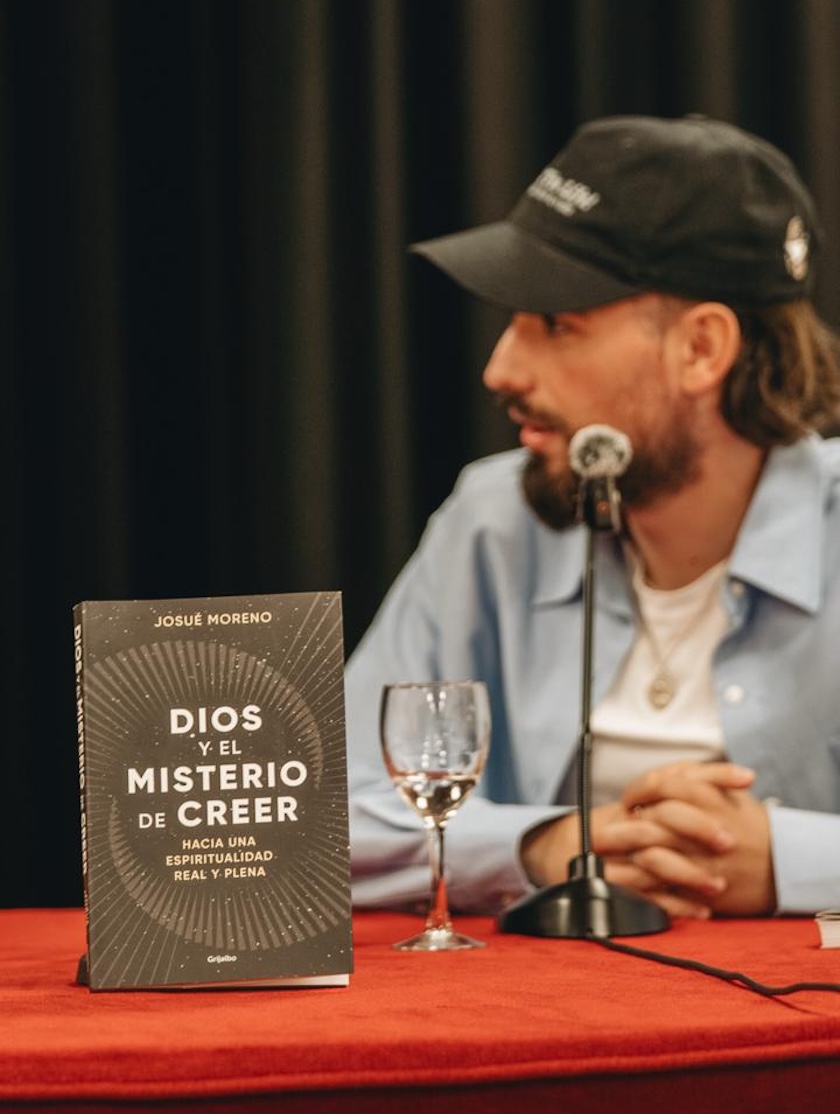
God and the Mystery of Believing (Grijalbo, Penguin) is an essay that cannot be pigeonholed as classic apologetics, but which does delve into existential questions in search of a convincing answer.
Moreno’s proposal is more about the journey, the path, and dialogue than about finding an absolute or total answer to these questions.
That is why the word ‘mystery’ stands out in his title, not as a claim to esoteric questions or pagan spiritualities, but from the wonder of discovering a God who not only gives answers but is interested in each person individually and specifically.
For Moreno, the key is not to abandon the search for truth, but to delve deeper into it. “This is not about possessing the truth, but about the truth possessing us”, he says in an interview with news website Protestante Digital. And it is on this path, he assures us, that Christian spirituality reveals itself as a force that “makes us more human, never less”.
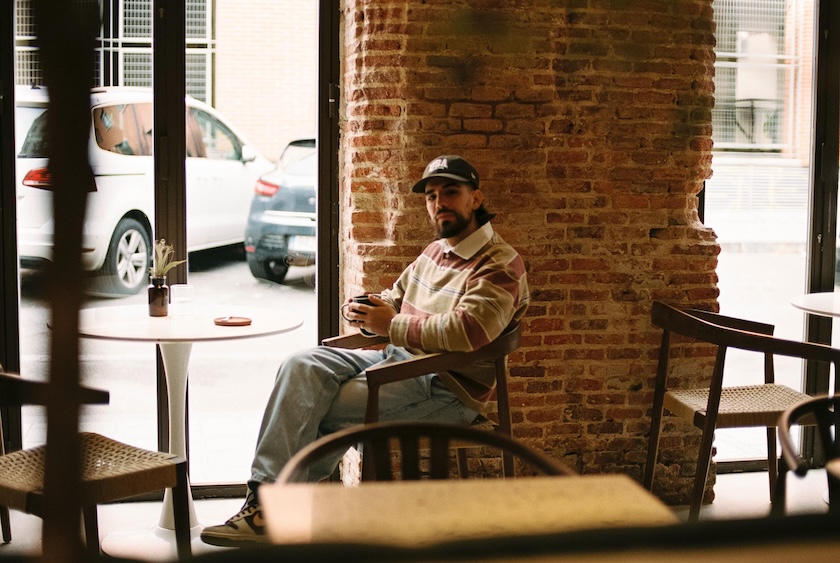
Moreno believes that we are living in a time that is particularly open to conversation about spirituality. Unlike years ago, when he perceived more resistance in academic or cultural spaces, today he observes a different sensibility.
“People are beginning to understand that faith is not believing against the evidence”, he says. The decline of hyper-rationalism has left room to admit that there are dimensions of reality that science cannot encompass.
In this context, he understands that many Christian communities must overcome their fear of questions. He believes that for a long time, those who doubt have been seen as problematic, when in reality “they are people who help us to deepen our understanding”.
Truth, he insists, is indispensable for a robust faith, and Jesus himself linked it to freedom.
The author also reflects on the role of personal crises. Breakups, rethinking, and moments of discomfort can become starting points. “Changing one's mind can be an act of courage”, he says, although he acknowledges that this process has a personal, family, or social cost.
Moreno shows how, throughout history, great thinkers have intuited the existence of something that transcends human beings, from Plato to Kant. “It was not an irrational or stupid idea”, he argues. For him, mystery and spirituality are part of the human experience, and to deny this is to close the door to knowledge.
In the book, which is full of autobiographical touches, Moreno explains how he has personally perceived God, whom he can now find more “in silence or in the contemplation of nature or animals” than in large events or crowds.
The current information overload presents obvious challenges. “Information overload exhausts our attention span, which is essential for spirituality”, explains Moreno. Even so, he appreciates that never before has there been so much access to valuable content on faith.
“A few years ago, if you did a Google search on God or any spiritual question, you would only find answers from Jehovah’s Witnesses; today we have many more resources available and accessible, something for which we can be thankful”, he explains.
However, Moreno understands that we live at risk of getting caught up in the pursuit of performance and content creation without leaving room for contemplation or boredom. “Social media is a bottomless pit; it’s hard to disconnect”, he acknowledges. That’s why he believes it’s important to remind ourselves that “we are not what we do” and to learn to set boundaries.
Although the book covers the experiences of different people and intellectuals with regard to God, for Moreno it is essential that anyone willing to explore the big questions of life gives Jesus’ proposal a chance. “If you are going to explore spirituality, why reject trying the Nazarene's proposal?”
He acknowledges that there may be mistrust of institutions, due to the harm that may have been suffered as a result of the wrongdoing of Christians. But he insists that Jesus presents himself as the mystery incarnate, “a unique figure in history”, worthy of investigation.
Moreno, who hosts a podcast called “El Cafetal” (The Coffee Plantation), hopes that this book will open up new horizons for believers in terms of their faith and awaken curiosity in those who have begun to ask questions that materialistic philosophies fall short of answering.
“God and the Mystery of Believing: Towards a Real and Full Spirituality”, by Josué Moreno, is available in Spanish language on Amazon.
Learn all about our #TogetherInThisMission initiative here (English).
Published in: Evangelical Focus – culture – “I sensed that my God lacked mystery”