
Advancing the stories and ideas of the kingdom of God.
Grace Hamman
Classicist Nadya Williams argues for believers reading the Greco-Roman classics.
Around 650 years ago, the grandfather of English poetry wrote a poem about the fall of Troy. Unlike Homer and Virgil, his ancient predecessors on the subject, Geoffrey Chaucer chose to pen a romance. As befits a tragedy, his hero, Troilus, dies in battle, abandoned by his lover, Criseyde.
Nadya Williams (Author)
HarperCollins
320 pages
$24.78
What follows is strange. Troilus’s soul leaves his body, rising above the fields of death. From this vantage point he witnesses the erratic stars, the wide spaces of heaven, and most of all, the insignificance of his own life. He laughs at this conclusion to all his woe and continues on his way to wherever the god Mercury will send him next.
The poet’s voice now enters as Troilus heads off to wherever virtuous pagans go after death. “Swich fyn!” he laments. “Such an end!” to Troilus’s great and wasted love, to his lusts and nobility. Chaucer directly addresses his audience: “O yong e fresshe folkes,” he writes, you are the image of God, and this world is a passing fancy. Seek not its feigned loves, its useless pagan gods and rites, its wretched appetites. Settle your affection on Christ. The poem ends with a prayer to the Trinity.
Each issue contains up-to-date, insightful information about today's culture, plus analysis of books important to the evangelical thinker.
This site is protected by reCAPTCHA and the Google Privacy Policy and Terms of Service apply.
Thanks for signing up.
Explore more newsletters—don’t forget to start your free 60-day trial of CT to get full access to all articles in every newsletter.
Sorry, something went wrong. Please try again.
All true. But Geoffrey: If this is your foreboding lesson, why waste time and talent recounting the Trojan tale at all?
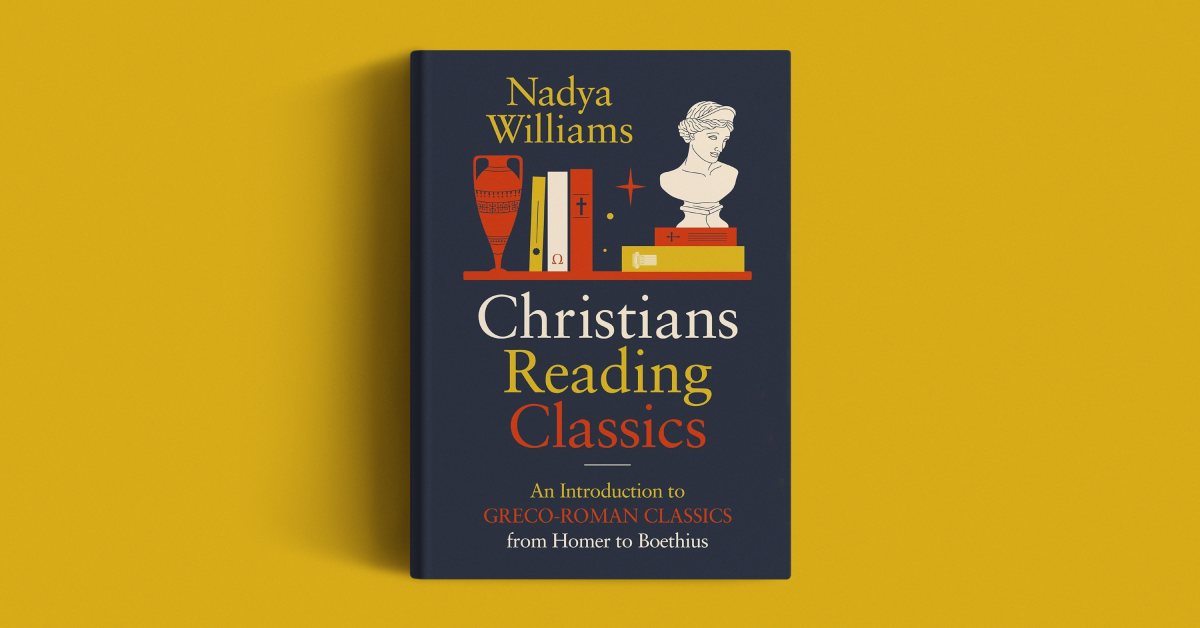
Nadya Williams’s accessible new book Christians Reading Classics takes up the same question Chaucer provokes, the same that early Christian writer Tertullian asks of reading pagan literature: “What indeed has Athens to do with Jerusalem?” Athens here stands in for the pagan art and learning of Greece and Rome before Christ’s salvific death and resurrection. As Williams states forthrightly, that art and learning need the Cross.
But in response to Tertullian, she argues that the relationship also goes the other way. Ancient writers who did not know the Lord can still offer us Christians great, humorous, ugly, and beautiful truths.
Christians Reading Classics sets out as an explicit apologetics for Christians reading the Greco-Roman classics, and it puts Williams’s experience as a former classics professor on full display. She makes no assumptions about readers’ depth of knowledge, carefully elucidating the biographies of figures like Plutarch or Aristophanes and even offering a glossary of unfamiliar terms. Lifelong learners, homeschooling parents, and students desiring context for their theological, literary, and historical studies will especially appreciate her pacing.
Organization also aids this apologetic project. Williams proceeds chronologically, a welcome choice for a book that brims with perhaps-unfamiliar names and places: Readers start in Homer (around the eighth century BC) and end in Boethius (who died around AD 524). Along the way, Williams keeps her history fresh by means of surprising pairings of genre and theme. A scandalous Athenian murder trial illustrates principles from Aristotle’s The Art of Rhetoric. Ancient cookbooks accompany warfare manuals. This approach offers breadth to readers who may be familiar with the big epics of the ancient world—The Odyssey, The Aeneid—but less conversant with smaller works, no less influential but more obscure. Aside from presenting glamorous battle heroes, the ancient world had its more homely and familiar texts, from recipes and gossip columns to bawdy comedies and political speeches.
Williams concludes each chapter with a look forward to our own times and an accompanying spiritual reflection. Chapter 7 begins in the women-centered tragedies of Aristophanes and ends in a moving contrast with Mary’s song of praise. The longing of Cicero, the “new man” in lineage-obsessed Roman society, speaks powerfully to our own scraping and striving despite our truer identity as “beloved children” of God.
Sara Kyoungah White
Interview by Patricia Raybon
Sometimes, these lessons from pagans are painfully relevant. On “How to Be a Good Man Under a Bad Emperor,” first-century historian and career politician Tacitus strikes particularly close to home. As Williams writes,
Bad emperors, Tacitus knew, were common; good ones were the exception. And this raised an important question for a historian who cared about role models: How can one remain a virtuous man under bad emperors? What is the cost of such virtue? And why is a virtuous life—and a possible untimely death because of it—worthwhile in a world that has dramatically different values? The very few heroes in Tacitus’s works are repeatedly men who put character and virtues first.
We Americans also live in an empire. What are the demands upon those of us who long to follow Christ here and now? How can we, like Tacitus’ infrequent heroes, practice virtue under vicious leadership? Christians Reading Classics follows the old paths of Ecclesiastes in unflattering but honest encouragement. There is nothing new under the sun. Our times are not more unprecedented than anyone else’s times.
“Jerusalem without Athens is ignorant of the physical and spiritual dangers of this world,” Williams writes. Lacking the witness of a world without Christ, we easily grow complacent or take things for granted. It is easy to slide into the reigns of the Neros or Galbas documented by Tacitus or become ensnared in the empty pursuit of reputation sought by Achilles or Agamemnon or fall prey to disillusionment and despair like Hesiod.
Williams’s other answer to Tertullian is more than a warning. It serves as an invitation to remember again how Christ and his church burst into the world in answer to timeless human longing.
When we read the pagan classics side by side with the Bible, especially the Gospels, something extraordinary happens. We are able to get closer to the world of the earliest converts to Christianity and can understand them better. In the process, we see why someone might turn their back on the cruelty of Zeus and seek the welcoming love of Christ. Thus, during our reading our own faith also grows.
These works made up the cultural universe of early Roman Empire believers. It is within their framework that ancient men and women encountered the transformative love of Jesus, like Troilus emerging into the heavens to look down at his limited loves and small piece of earth, laughing that reality was more expansive and beautiful than he had known.
Sara Kyoungah White
Chad C. Ashby
The historical church felt the shock of this revelation better than we do today. It’s why Virgil, the great Latin author of The Aeneid, was the fittest guide to lead Dante through Hell and Purgatory in The Divine Comedy. He couldn’t accompany the poet through Heaven—only someone who loves Christ could do that. But he did know the pain of a world without Christ and, equally, the sharp desire for something beyond human capacity. We would do well to relearn the contours of that longing, to follow Virgil’s lead once again.
Grace Hamman is the author of Ask of Old Paths: Medieval Virtues & Vices for a Whole & Holy Life and Jesus Through Medieval Eyes: Beholding Christ with the Artists, Mystics, and Theologians of the Middle Ages. Learn more about her work at gracehamman.com.
Nadya Williams
Nadya Williams
Nadya Williams
Nadya Williams
Nadya Williams
View All
CT Editors
Our picks for the books most likely to shape evangelical life, thought, and culture.
Marvin Olasky
20 more suggestions from our editor in chief.
The Bulletin
Steve Cuss, Clarissa Moll, Russell Moore
Hosts of CT Media podcasts discuss their Christmas traditions, memories, and advice for navigating the season.
Review
Grace Hamman
Classicist Nadya Williams argues for believers reading the Greco-Roman classics.
Ashley Hales
Some young Christians embrace lower-tech options.
Being Human
How your nervous system helps you notice God
Dorothy Littell Greco
When we fail to protect and honor women like Jesus, we all lose.
Chris Poblete
When we outsource intimacy to machines, we become what we practice. And we’re practicing the wrong things.
You can help Christianity Today uplift what is good, overcome what is evil, and heal what is broken by elevating the stories and ideas of the kingdom of God.
© 2025 Christianity Today – a 501(c)(3) nonprofit organization
“Christianity Today” and “CT” are the registered trademarks of Christianity Today International. All rights reserved.
Seek the Kingdom.